Createvo for Creators
Some details have been generalised or omitted to respect confidentiality. All views are my own and do not necessarily reflect those of Createvo.
Context
Createvo gave creators a way to measure performance, benchmark against peers, grow their audience, and collaborate with brands. At the center of the experience sat the iScore, a single headline metric designed to quantify a creator's value. On paper, it was a complete toolkit. In practice, creators were uninstalling the app at a rate the team could no longer ignore.
Exit research revealed a clear pattern behind the churn. Creators struggled to understand whether their performance was good or bad, what factors influenced their iScore, or how they could improve it. Much of the data surfaced by Createvo was already available through Instagram Insights, leaving little reason to build a new habit around the platform. When creators needed answers, they returned to the tools they already trusted.
Trust emerged as a second, equally important issue. While the platform generated value for brands, creators felt they had little visibility or control over how their data was being shared. Collaboration required a single, all-or-nothing permission, creating hesitation at the moment trust mattered most.
Ultimately, two core needs went unmet: creators wanted to understand their value, and they wanted control over who could access it. The product delivered neither, resulting in low engagement, weak retention, and increasing creator churn.
My Role
I led the UX, UI, branding, and visual design for the creator app, collaborating closely with a cross-functional team spanning Product, Engineering, Growth, Marketing, and the CEO.
My primary focus was on discovery and product direction: understanding why creators were leaving, identifying the users the product should serve, and defining a design strategy that treated value and trust as interconnected challenges rather than isolated features. From research synthesis through concept development and execution, I helped shape an experience that made creators' performance easier to understand while giving them greater confidence and control over their data.
The Problem Space
Auditing the app against the research surfaced five problems:
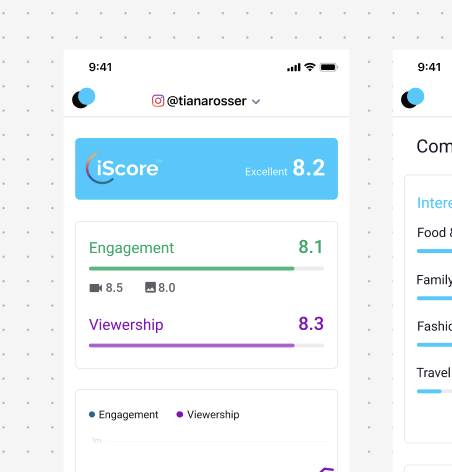
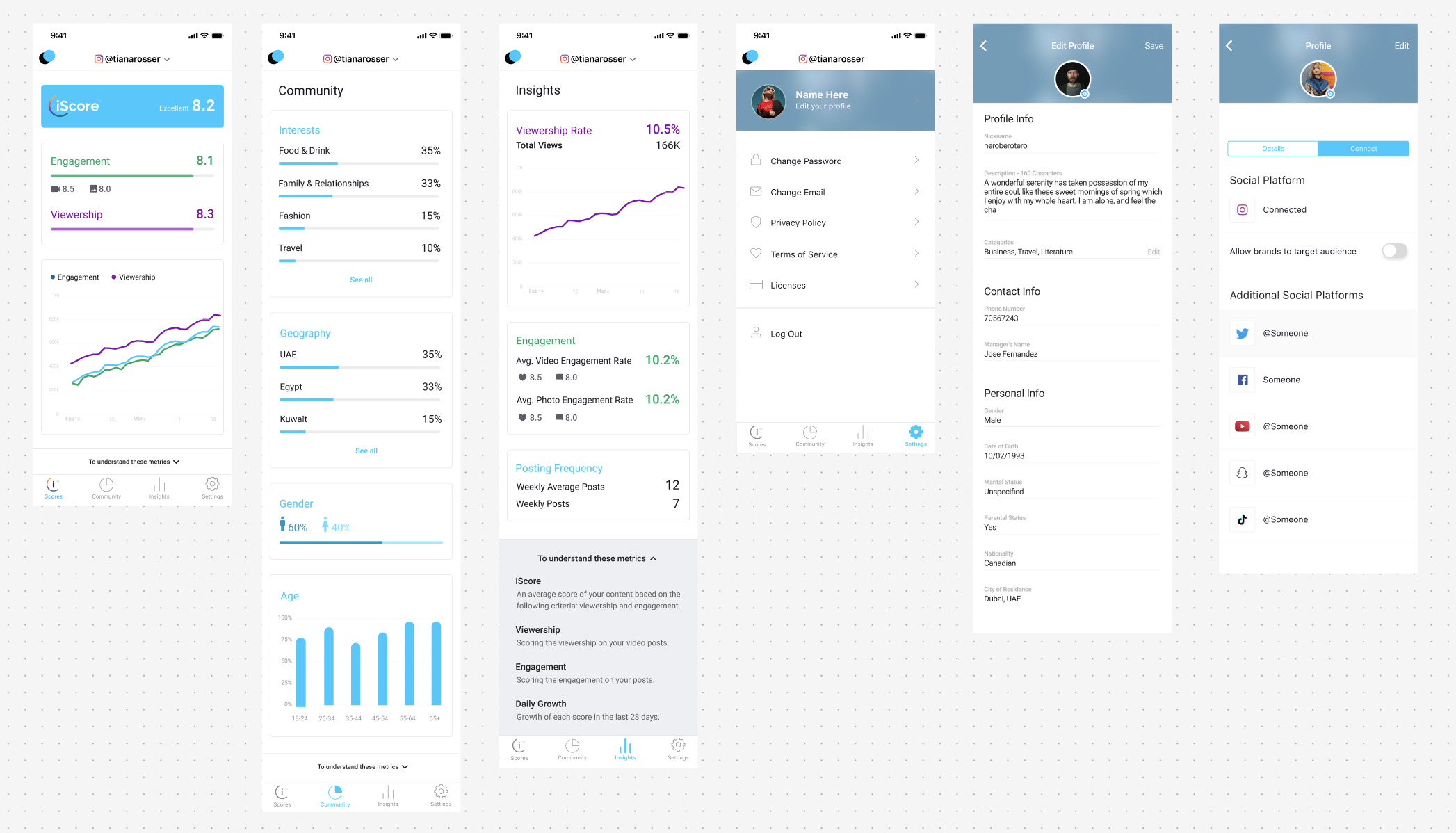
Metrics Without Meaning: The iScore and its supporting metrics were presented without context or explanation. Creators couldn't tell what the score represented, whether their performance was strong or weak, or what actions would improve it. The app surfaced data, but not meaning.
Conflicting Performance Signals: Performance metrics such as views and engagement were displayed alongside the iScore, but the relationship between them was never explained. Instead of helping creators understand their performance, the overlap created additional confusion.
No Clear Reason to Return: Much of the audience data in the Community section was sourced directly from Instagram, resulting in an experience that largely replicated insights creators already had access to. Without unique value, there was little reason to return to Createvo.
Data Sharing Without Control: Data sharing relied on a single global permission toggle that allowed brands to access audience information. Creators had no ability to manage access at the brand or campaign level, reducing their sense of ownership and control over their data.

Built for Brands, Not Creators: The product was structured around the information brands needed to evaluate creators rather than the information creators needed to grow. As a result, creators often felt like the subject being assessed rather than the user being supported.
The Objective
The objective was not to redesign a dashboard. It was to make a creator’s own value legible to them and to turn trust into something they could actively control.
This meant reframing a product that had, over time, drifted toward serving the brands that paid for it rather than the creators who generated its data and realigning it around creator understanding, agency, and ownership.
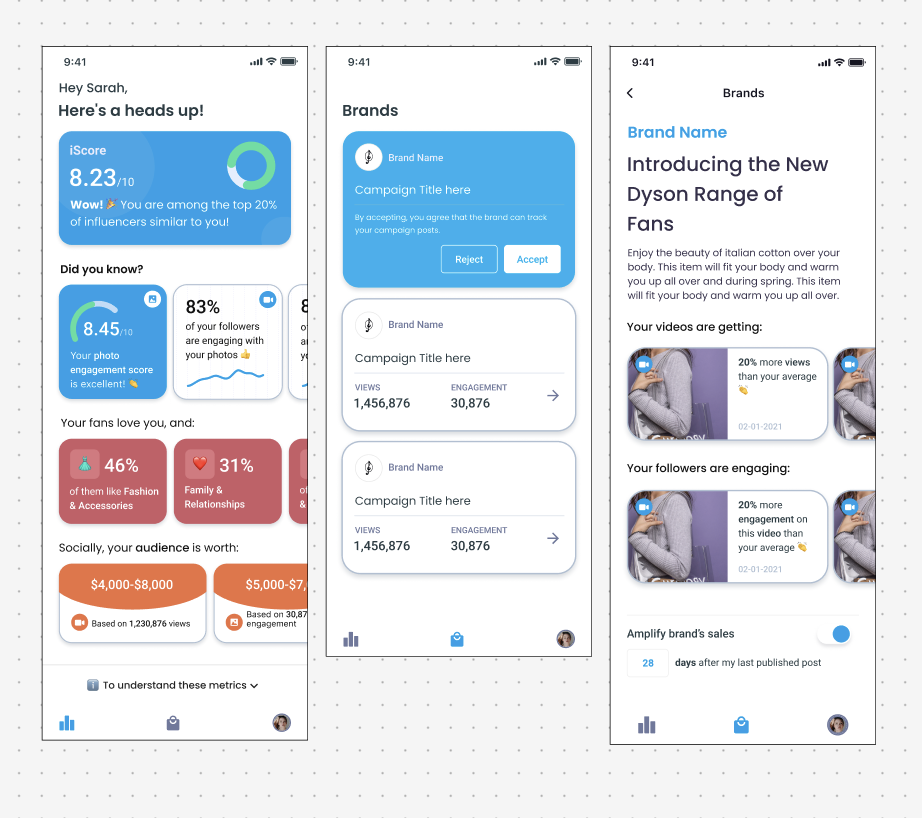
Solution
The diagnosis resolved into three product directions. Each one mapped to a specific failure: value, retention, or trust ensuring the redesign was not aesthetic iteration, but a targeted response to root causes.
01- Demystify the Metrics
Make data legible: what each number means, whether it is healthy, and what action to take next. This addresses the core issue of missing perceived value and ensures the product earns a reason to be opened.
Answers: No perceived value
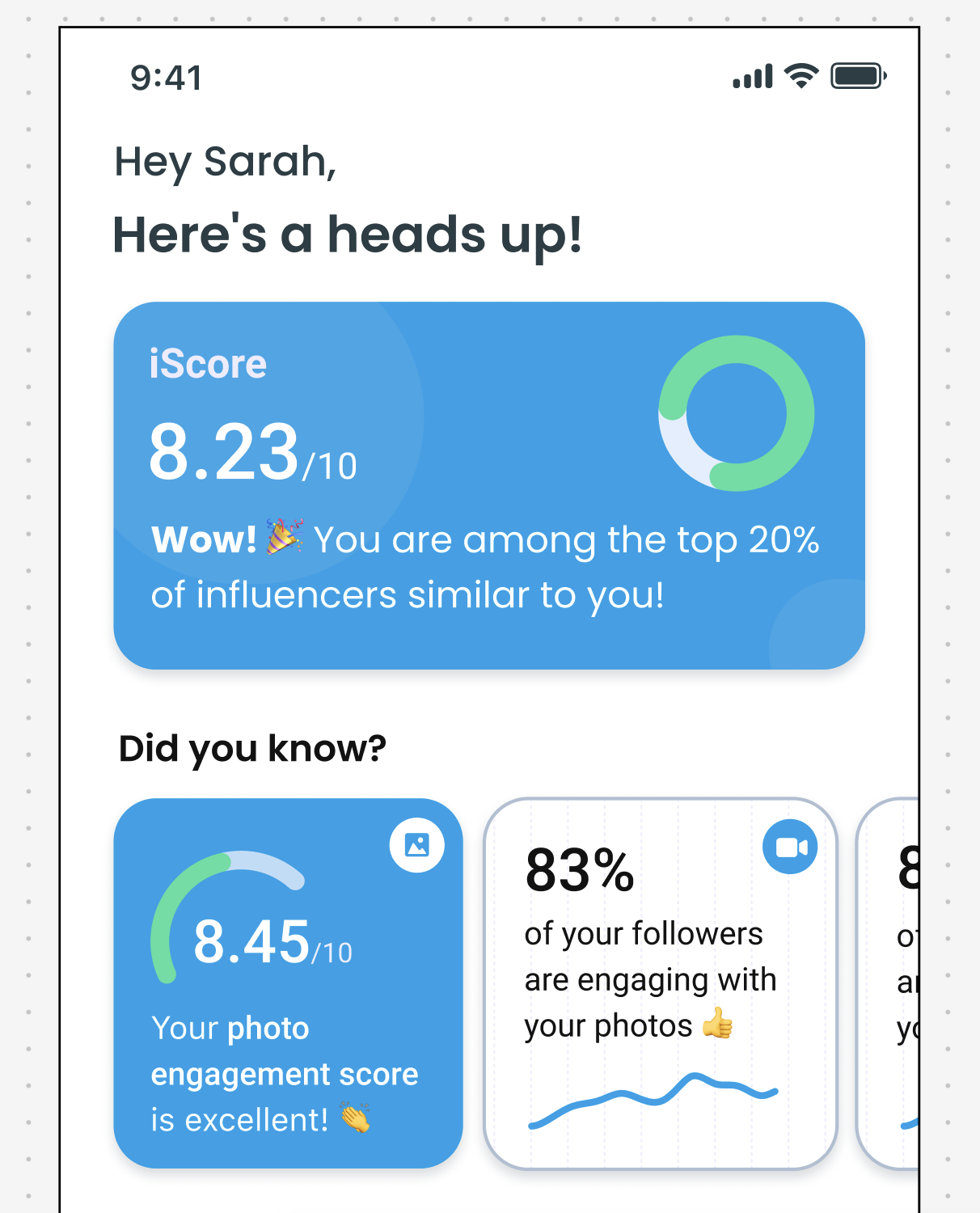
02- Build Reasons to Return
Introduce goals, milestones, and visible progress so value compounds over time rather than resetting at each session. This creates ongoing motivation to re-engage instead of one-off check-ins.
Answers: Churn & habit formation
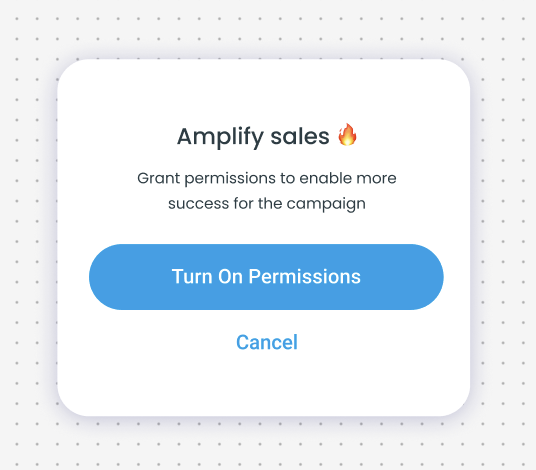
03- Give Creators Granular Control
Replace the all-or-nothing sharing model with per-brand and per-campaign permissions, turning uncertainty into explicit choice and hesitation into trust.
Answers: Trust & privacy
Success Metrics
Success is measured through a mix of leading indicators (early behavioral signals of improved clarity, trust, and engagement) and lagging indicators (longer-term retention and adoption outcomes).
These outcomes define how success will be evaluated once the redesign is shipped. They establish baseline-to-target directionality rather than fixed numbers, reflecting early-stage product validation.
Retention
Measured by change in uninstall rate and 30-day retention after launch.
Target: decrease in churn, increase in sustained weekly active usage
Trust
Measured by activation of brand collaboration features following the introduction of granular permissions.
Target: increase in opt-in rates for collaboration features and reduced hesitation at permission stage
Reflection & Next Steps
What the Work Revealed
In Createvo’s case, churn was a symptom of a deeper issue: the product was not consistently serving creators as its primary user. This misalignment shaped the experience long before it was explicitly recognised.
The response was not more features, but a reorientation of the product around creator value, clarity, and control.
Next Steps (Planned)
The next step was to ship the prototype for creator testing, focusing on whether improved metric legibility, return incentives, and granular control would impact comprehension, trust, and retention.
Testing would guide iteration and help prioritise the rollout sequence across the three pillars, based on whether perceived value or trust had the greater impact on retention.
This phase was handed over after my departure.
Closing
This work reframed Createvo from a system that displays creator data to one that serves creator agency. Its success depends on whether clarity and control are enough to reverse creator churn.